Pages

17 November 2011

Sunny Photos of Groningen

The weather in Groningen has become very wintry lately - freezing temperatures and gray skies, with a mix of mist and fog.  In an attempt to remind myself that my new home can be quite beautiful and sunny, I find myself looking back at the photos of Groningen that I took when I visited in June and when I first moved here in September.

Since I haven't shared a lot of photos of Groningen on this blog yet, here are some favorite photos of Groningen in warmer, sunnier weather.  


View of the Grote Markt from the Martinitoren

Prinsentuin

De Helper at the Paterswoldsemeer

Hornse Meer


The Noorderplantsoen


Shopping on the Vismarkt


14 November 2011

Dutch Food: Stamppot

In search of a "typical Dutch" dish to prepare for dinner, I informally surveyed several international friends here in Groningen.  When asked to name a typical Dutch dish, nearly everyone included stamppot among their responses.

So, what is stamppot?  It's simply mashed potatoes with a variety of other veggies and herbs thrown in and smashed together.  As this is primarily a vegetable dish,  stamppot is extremely easy to "veganize" (just omit the sausage or bacon that most recipes call for).  So, I decided that stamppot would be a good dish to start with as I enter the exciting world of Dutch cooking.

Here's the recipe that a good friend here in Groningen helped me put together:

Vegan Stamppot (serves 2 as main, 4 as side)
Ingredients:
4 medium potatoes, chopped
2 medium carrots, chopped
2 cups curly kale (boerenkool), chopped
1 medium leek, chopped
2 cloves garlic, minced
10 ml (2 tsp) dried rosemary
5 ml (1 tsp) dried thyme
10 ml (2 tsp) olive oil
freshly ground black pepper and salt to taste
Instructions:
1. In a large stockpot, boil the potatoes and carrots for 25 minutes, or until tender.  After 15 minutes, add the chopped kale.
2.  In a separate, lightly oiled pan, sautee the garlic and leek until tender.
3. Drain the potatoes, carrots, and kale.  Return everything to the pot, and add the garlic and leek.  Measure out and add the rosemary, thyme, olive oil, salt, and ground pepper.
4. Mash together until smooth.  A splash of plain soymilk can be added for a smoother texture.

And here are some photos:
Boiled potatoes, carrots, and kale are mixed together
Herbs and olive oil are added
Plated and ready to eat!
I served my stamppot with quinoa and marinated, baked tofu for a well-rounded, hearty meal.  I enjoyed the stamppot - it was a great accompaniment to the baked tofu, and a fun way to dress up otherwise boring mashed potatoes.

After perusing some Dutch cookbooks, I've found that there are a lot of variations on stamppot, so I'll post updates when I try out other recipes.

Tell me in the comments if you have any fun Dutch recipes that I should try out!

12 November 2011

A Weekend Trip to Brussels

My first journey outside of the Netherlands since my arrival in Groningen was a weekend trip with my husband to Brussels, Belgium.  Just a 5-hour train ride from Groningen, it was very easy to set up our trip so that we would arrive on Friday night and return to Groningen on Sunday evening, while still getting to see and do a lot in Brussels.

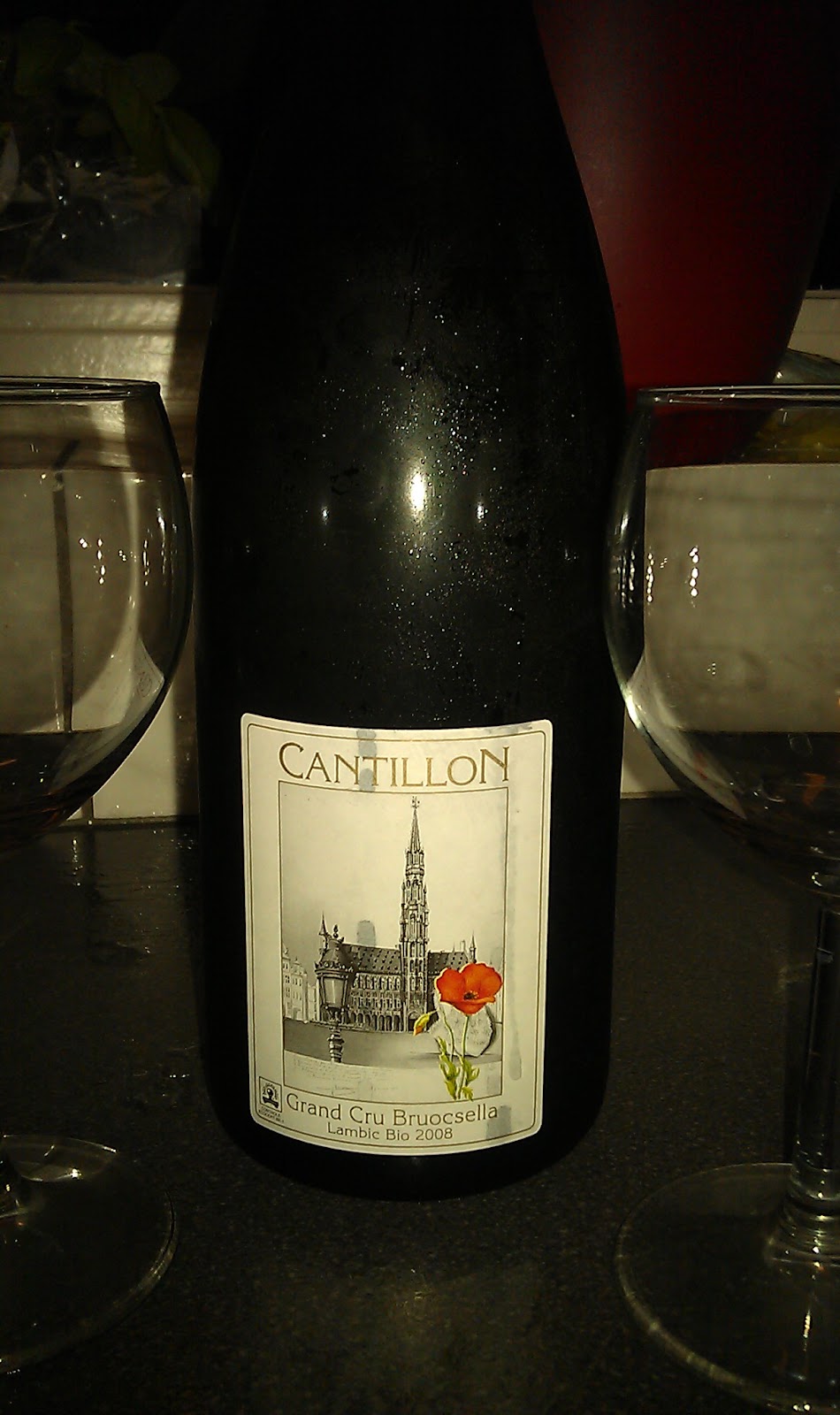
On Saturday morning, we were up bright and early so that we would arrive at the Cantillon Brewery when it opened at 10:00 AM. We'd heard that this is the place to learn about the lambic, geuze, and kriek beer-making processes, and we were not disappointed. We learned that lambic beer is unique because yeasts are not added during the brewing process; rather, the beer is exposed to the yeasts that are naturally-occurring in the air overnight before being stored in barrels. This is known as "spontaneous fermentation." The result is some very sour and very tasty beer! Here are a few photos we snapped during the tour:
The hop boiler
Organic cereals
The big, flat copper vat in which the wort is exposed to the natural yeasts at the brewery
Framboise, Lambic Grand Cru, and Kriek
Something that became clear to us during our tour of Cantillon Brewery, is that they are very dedicated to producing their beer in a responsible manner.  They use organically grown cereals and they control insects that are attracted to the fermenting beer by respecting the spiders living in the brewery - allowing the arachnids to do the pest-control duties naturally. 

After our brewery tour, we headed over to Den Teepot, which is a vegetarian (almost entirely vegan) restaurant west of the Grand Place. My husband and I are both vegetarians (I'm vegan), so we were very excited to find out about Den Teepot. The restaurant is above a health food store, so it was a little bit difficult to find, but the search was worth it.  We both had heaping plates of vegan deliciousness that would prepare us for a long day of wandering Brussels, sampling chocolates, and drinking great beer.
Vegan lunch at Den Teepot - delicious!
After lunch, we took a long meandering walk around Brussels, and then went sight-seeing on the Grand Place and window-shopping at the various fine chocolate shops.  We also paid a visit to the famous peeing-boy statue, known as Manneken Pis.  Here are some favorite photos:

The Grand Place
Window-shopping at the chocolate shops on and around the Grand Place
Manneken Pis, dressed up in honor of the Belgian Paralympics Committee
For dinner, we met up with a dear friend who was in town after a conference. This meal was at another vegetarian restaurant, known as Slurps, in the Ixelles neighborhood.  Slurps serves dishes representing cuisines from all over the world, beautifully presented and very tasty. It was a little off the tourist track, but definitely worth the journey.

After dinner, we decided to increase our knowledge of Belgian brews at Moeder Lambic, a hip bar that had a large range of brews from hoppy to malty, and light to strong.

On Sunday, we had brunch at Le Pain Quotidien, where the chocolate spreads are plentiful and the vegan dishes are all helpfully marked on the menu (which is available in French, English, and Flemish).  It is a very affordable place because one can order small dishes a la carte.  The rest of Sunday was spent wandering Brussels and taking in its many parks and cityscapes, before heading home to Groningen.  Some more photos:

Many of the buildings in Brussels are adorned with scenes from beloved comic strips. It was a lot of fun spotting them on our walks around the city.


Here are some cost-saving tips that we learned along the way: To keep costs down, we booked a "weekend return" deal through the NS Hispeed web site and found a good hotel deal at the Sofitel Le Louise on Booking.com. We found that Brussels is actually a pretty affordable place to visit as there is a lot of free or low-cost stuff to do there. Our brewery tour cost only 6 euros each, which included a couple of glasses of beer at the end of the tour.  A walk on the Grand Place is free, and window shopping for Belgian chocolates is also free - if you can resist the urge to buy them.  As you can see from our photos, Brussels also has quaint parks, great views, and public art that can all be accessed free of charge.  Food was the major expense, but we found the prices to be quite reasonable given the generous portions.

Cheers!

08 November 2011

Typical Dutch: The Flessenlikker

I often hear the phrase "typical Dutch" thrown around upon discovering something unique to the Netherlands.  This is especially the case when a shop owner explains a gadget of some sort that I had never seen in the USA, or to describe the weather on days that it is particularly unpredictable.

As I discover new and interesting "typical Dutch" things, I will share them on this blog.

This brings me to the topic of this post: the flessenlikker.  The flessenlikker (roughly translated to "bottle- licker") is an ingenious, yet very simple, kitchen tool that I stumbled across on a recent shopping trip to a housewares store in my neighborhood in Groningen.

Although the flessenlikker originated in Norway (according to this Wikipedia article), it is nevertheless considered a "typical Dutch" kitchen implement due to its prevalence in Dutch homes.

Why is it so prevalent? I think the answer is in its functionality - just as its name implies, it is used to scrape foods like peanut butter, mayonnaise (a condiment that is extremely popular here despite its cholesterol content), fruit preserves, and mustard from the insides of jars or bottles. Without it, bits of peanut butter or other sauces or condiments stuck to their jars or bottles inevitably end up washed down the drain or thrown into the recycling bin.  The flessenlikker's design allows it to get at food that a flat knife or spoon cannot remove. These handy little spatulas may be small, but they are waste-preventing powerhouses.

I was so inspired by the simplicity of the flessenlikker and its ability to reduce food waste, that I decided to procure one for myself.  Here it is, next to a jar of peanut butter:


My flessenlikker: preventing peanut butter waste
I've used my flessenlikker several times now, and I can say without reservation that it was the best 2 euros I've ever spent. I haven't kept track of the actual volume of food that the flessenlikker has recovered from bottles and jars before I've washed them out, but my unscientific estimate is that it has already paid for itself in recovered peanut butter, jam, and mustard.

How did I ever live without the "typical Dutch" flessenlikker?

04 November 2011

Settling in Groningen (Or, How to Furnish an Apartment for 1000 Euros or Less)

Our local IKEA

Settling in Groningen has been a process.  Six weeks after our arrival, it is still not complete.

Of course, there was the paperwork for everything from obtaining a burgerservicenummer (a Dutch social security number) and a residence permit to registering for a special card that opens the curbside rubbish bins.

Because we rented an unfurnished apartment, settling here also meant that we would need to find some furniture - and fast! We had only one week after our arrival until my husband started working full-time at his lab, so if I was going to make use of his furniture-lifting prowess and construction skills, I would need to find as much of the heavy furniture as possible during that first week, and wait to do the small stuff, like curtains, later.  Otherwise, we'd be spending some more quality time with the air mattress that we'd brought along in one of our suitcases from the USA.  Additionally, due to the transaction costs associated with exchanging our US dollars for the almighty euro, we attempted to due this on a rather tight budget: 1000 euros.

The time constraints and the budget meant that we had very few options with respect to how we would furnish our place.  For the sake of simplicity, we decided that furniture would come from 3 sources:  the secondhand furniture institution in Groningen known as Mamamini, IKEA, and a facebook group full of Groningers advertising their used furniture (which just happens to originate mostly from IKEA).

This might have been very easy if we'd had an Internet connection when we moved into our apartment. However, we did not have an Internet connection, so we had to walk back and forth to the local IKEA (about a 30 minute walk away - no bikes yet!), the local Mamamini (about a 20 minute walk away), and use a local cafe's Wifi to keep track of good deals on facebook - every day for a week.
A bakfiets: it's how furniture is moved here in Groningen
Despite this, in just that first week, we managed to find a bed, a 3-seater sofa, a desk, a secondhand dining table, 4 chairs (2 of which were secondhand), a wardrobe (no closets in our apartment!), secondhand shelves, a secondhand espresso machine, and a very lovely secondhand orchid plant for a total of about 800 euros. We would not have niceties like curtains, trash bins, light fixtures (the apartment came without those too!), or dishes and cooking utensils (except the few that were packed in our suitcase) for another week or so.

To completely understate things: we really missed all that furniture that was in storage back in the USA!  If we were to do it over again, we might have shipped it all over here to avoid the hassle of locating and assembling suitable furniture, but hindsight is 20/20, and we probably would have spent too much in shipping costs anyhow.

I'll end this post with a scene from our furniture assembly marathon:

 
By the way, those smiling cartoons in the IKEA manual failed to provide an accurate portrayal of the range of emotions (i.e. anger, fear, frustration, anxiety, destructiveness) experienced when assembling our bed frame.

02 November 2011

The Big Move

Six weeks ago, my husband and I moved out of our apartment in Berkeley, California.  We have moved apartments several times in the past, relocating ourselves to San Francisco after college in Ohio, then around San Francisco for awhile, and following that, to our first place in Berkeley, and finally into our second place in Berkeley, where we settled for five years.  No big deal.

Except that this time was much different.  We would not simply load up the car or a U-Haul and move our stuff up the street or across a bridge.  This time, we sold and gave away most of our personal belongings, save some furniture and bicycles that went into storage.  We put the bare necessities (including an air mattress - our apartment waiting for us in the Netherlands was completely unfurnished) into 2 suitcases each. And then we boarded a plane to begin our exciting new life in Groningen, Netherlands!

Of course, this move was not without a great deal of forethought, trepidation, and, at times, outright panic.  Orchestrating an international move was no easy task.  There were forms upon forms to fill out in order to ensure that our residence in the Netherlands was meeting all of the legal requirements (this is where being a lawyer came in extremely handy). There was the task of renting a place to live - sight unseen.  And, let's not forget, the huge financial burden of an international move.  Overlaying this whole process was the additional hurdle of dealing with our relocation and finances in another language - Dutch - in which neither of us is fluent, or even proficient.  What fun!

So, why did we do it?   Why are we living in the Netherlands, surrounded by folks who speak Dutch, without our car, without our families, without our friends, and without our furniture (all of which we miss terribly)?

Because it seemed like a good idea at the time.

The time, to be precise, was midsummer 2011. My husband had recently completed a PhD in biophysics at the University of California, Berkeley.  While in the late stages of completing said degree, he commenced The Job Search (capitalized to emphasize that this was a Big Deal).  The Job Search involved flying around the USA and Europe and visiting scientific labs to decide where he would do his postdoctoral research.  During The Job Search, he was invited to visit a lab in Groningen, the Netherlands, in which he was extremely interested.

It just so happened that the week that he was invited to visit the extremely interesting lab in Groningen was the same week that I had taken vacation time off work for a trip to Hawaii, for which I had already paid.  Seeing that my husband did not want to miss the opportunity to visit the extremely interesting lab in Groningen, I graciously canceled our trip to Hawaii (thank goodness those plane tickets were refundable!), and spent all the money that I would have used for a week in Hawaii to buy my own ticket to accompany him to the Netherlands.

Upon visiting the Netherlands, we discovered that it is an excellent place to live, especially Groningen.  Instead of laying out on a Hawaiian beach for a week, I spent my time scoping out potential neighborhoods and the cultural scene to get a sense of whether I could realistically handle living there, while my husband met with the head of the extremely interesting lab, as well as the colleagues that he would soon have the opportunity to join.

When my husband received the offer to join the lab at the end of our visit, it became very clear that Groningen was the right place for him.  However, to me, a move to Groningen would mean leaving my very stable career in the legal profession for a few years while my husband pursued his postdoctoral research.  So, we returned to the USA and mulled over the decision for awhile.  We thought about it a lot. To the point at which we could hardly think of anything else.  Could I possibly handle being a housewife for awhile while my husband pursued his scientific dreams?  Hadn't we said something about supporting each other's dreams in our wedding vows?  Could we pull this off financially?  Did I really want to learn to speak Dutch?

Well, the answers to those questions are now obvious.  After running the numbers, doing some soul searching, and running some more numbers, we determined that moving to the Netherlands would be a good idea because it would be an opportunity for both of us to do something completely different and to have experiences that we would not have if we stayed on the same predictable paths we were on in California.

So, here we are, and here is my attempt at blogging about my experiences in life, food, and travel in the Netherlands and beyond.

The Martinitoren and the Grote Markt, Groningen, Netherlands